
You want to make a quilt, take up a pair of jeans or finally sew the dress you’ve been saving a pattern for. Somehow, shopping for the machine has become a project of its own.
There are hundreds of stitches to compare, bundles full of mysterious feet and an awful lot of promises about what counts as “heavy duty”. Let’s narrow things down.
The one we’d start with
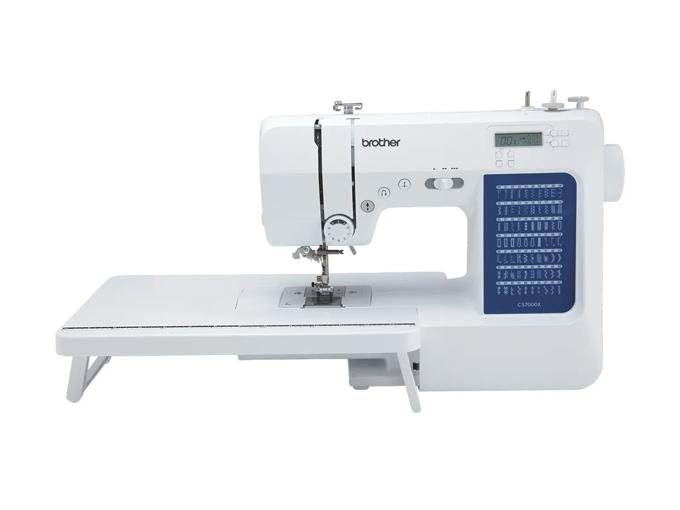
The Brother CS7000X is our best all-round sewing machine for home use. It gives beginners useful control over their sewing speed, comes with a proper quilting accessory package and covers the everyday jobs you’re likely to ask of it. You don’t need a more expensive machine just because you’re ambitious.
For simpler sewing, the XM2701 leaves more of your budget for fabric. If you already know you want to make clothes regularly, piece quilts or embroider gifts, there’s a more specific match below.
Find your sewing machine
| You want to… | Our pick | Why this one? |
|---|---|---|
| Sew a bit of everything | Brother CS7000X | Speed control and a useful quilting package |
| Start simply and spend less | Brother XM2701 | Dial controls and the essentials for first projects |
| Repair jeans and sew canvas | Singer 4423 | Adjustable foot pressure for home sewing jobs |
| Make your own wardrobe | Juki HZL-F600 | More control over buttonholes and fabric handling |
| Spend more time quilting | Juki TL-2010Q | A dedicated straight-stitch setup |
| Add embroidered names and motifs | Brother SE700 | Sewing and 4 × 4-inch embroidery in one machine |
We’ve linked to US models. Check the voltage, seller and included accessories before ordering, especially if you’re buying from outside the US.
Brother CS7000X
Best all-rounder for everyday sewing
The CS7000X is the one we’d steer most home sewists towards. A cushion cover today, a summer skirt next month, perhaps a first quilt after that: its mix of controls and accessories leaves plenty to explore.
The speed slider is a particularly good reason to choose it. Set a comfortable limit and you can concentrate on guiding the fabric without worrying quite so much about an enthusiastic right foot. Needle positioning helps when you pause to turn a corner, too.
Then there’s the quilting kit. You get a wide table to support the fabric, plus walking and quilting feet, alongside 70 stitches and seven one-step buttonhole styles. That’s a useful amount of equipment to have from the start, especially when you’re still working out which accessories do what.
We’d pay the extra over the XM2701 for those controls and the table if the price gap fits your budget. They’re features you can put to work on an early project.
The reason to look further: presser-foot pressure is fixed. If you regularly need to change how firmly the foot holds a fabric, the F600 gives you that adjustment. And the wide table supports a quilt; it doesn’t create extra space to the right of the needle.
Brother XM2701
Best for a simple, affordable start
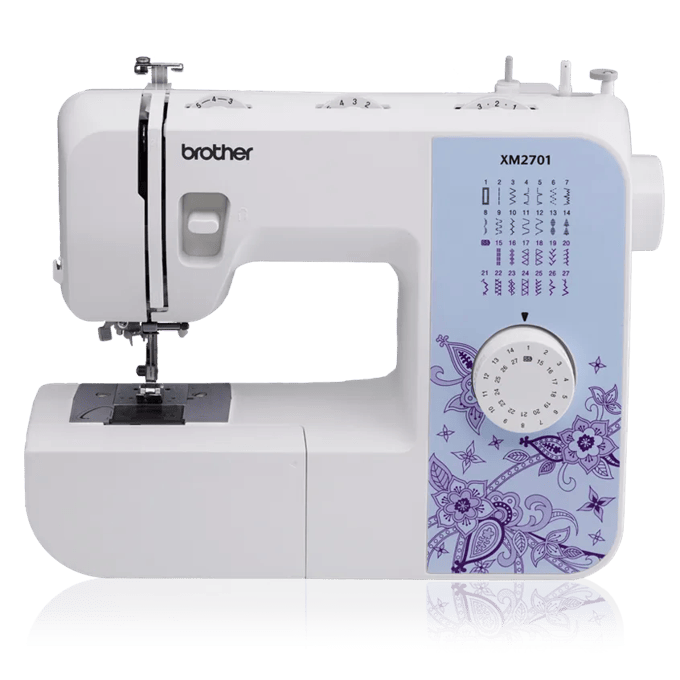
A first machine doesn’t need to account for every hobby you might take up. If the plan is pillowcases, tote bags and rescuing the occasional hem, the XM2701 is a very sensible way in.
You choose stitches with a dial. There are 27, including a one-step buttonhole, and the six included feet cover jobs such as zippers and blind hems. An automatic needle threader and a top-loading bobbin take care of two conveniences we’d want even on an inexpensive machine.
What sells us on it is the balance: enough equipment to make useful things, without asking a new sewer to commit to a bigger purchase. Keep some money back for decent needles, a fabric you actually like and, if you can, a lesson. A machine is only part of getting started.
There is one choice to make before you buy. The pedal controls your speed; there’s no separate speed-limiting slider. If you’re nervous about the machine running away from you, we’d spend more on the CS7000X. Simple dials don’t automatically make a machine the easier option for every beginner.
For more first-machine options, browse our beginner sewing machine guide.
Singer Heavy Duty 4423
Best for denim repairs and canvas projects
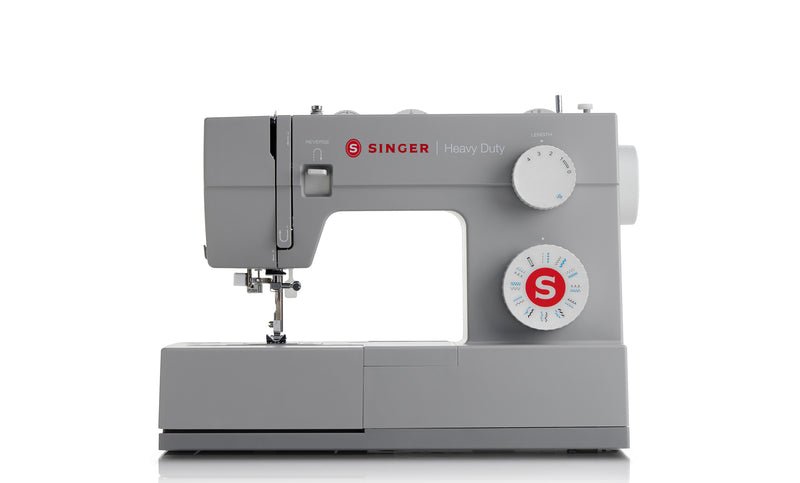
Some sewing is less about pretty decorative stitches and more about getting another year out of your favorite jeans. The 4423 is our pick for that practical corner of the sewing room: denim repairs, canvas totes and home furnishings.
Adjustable presser-foot pressure is the feature we’d pay attention to. It lets you change how firmly the fabric is held against the feed dogs, giving you another adjustment when setting up a project. There are 23 built-in stitches, a one-step buttonhole and a top speed of 1,100 stitches per minute.
A quick translation of the advertising: “97 stitch applications” means different techniques you can achieve with those stitches. You aren’t getting 97 separate stitch patterns.
We’d keep its workload firmly in home-sewing territory. The words Heavy Duty don’t make it an industrial upholstery machine, and speed alone tells you very little about crossing a bulky jeans seam. Test the full seam thickness on an offcut, with a suitable needle, before committing your garment.
It’s also worth pricing the Singer 4452 with its walking foot, non-stick foot and clearance plate. If you’ll use those extras and the price difference is modest, that package could be the better buy. Check the contents of the actual listing.
Juki HZL-F600
Best upgrade for making your own clothes
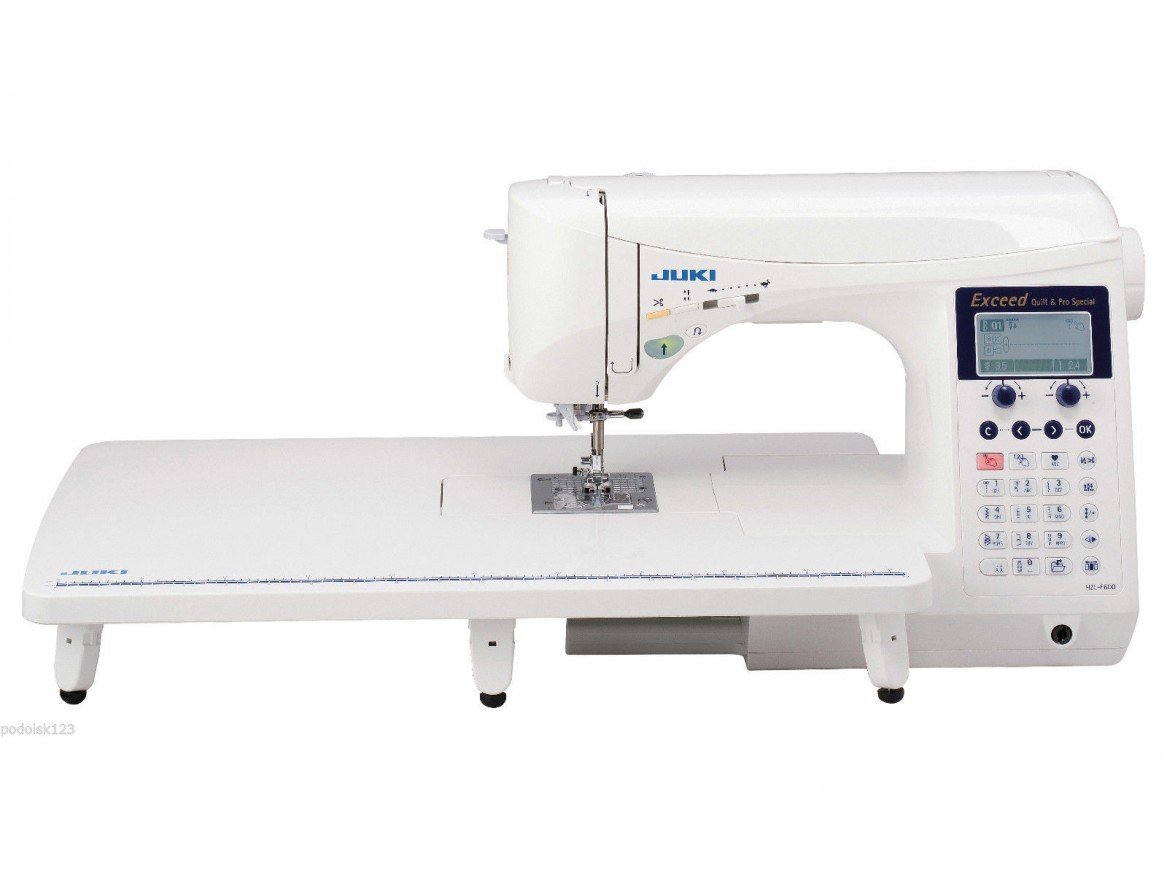
A row of buttonholes down the front of a shirt is an unforgiving finishing touch. If clothes making has become a regular pleasure, the F600 gives you more say over details like these—and a few welcome shortcuts along the way.
Its 16 buttonhole styles include adjustable cutting width, so you can change the opening without changing the surrounding stitching size. Adjustable foot pressure adds another way to set up for your fabric. These are good reasons to move beyond a basic machine when you’re tackling more demanding garments.
The conveniences deserve attention, too. Automatic thread trimming deals with the thread ends, while the included knee lifter raises the presser foot without taking your hands off the work. Imagine stopping, repositioning and starting again across a whole project. Small savings in effort begin to make sense.
This is an upgrade we’d buy for regular use. If you only get the machine out a few times a year, the cheaper Brothers leave you with much of what you need. If sewing is how you like to spend a free afternoon, the F600’s extra adjustments have a clearer purpose.
Before ordering, compare the Juki F300’s features and accessory package. It also has electronic buttonholes and thread trimming. The F600’s bigger stitch library alone wouldn’t persuade us to spend more.
See the controls before you buy. Juki’s F-series operation video gives you a closer look at the machine family. It’s useful context if you’re moving up from a simpler model.
Juki TL-2010Q
Best specialist for quilting and piecing
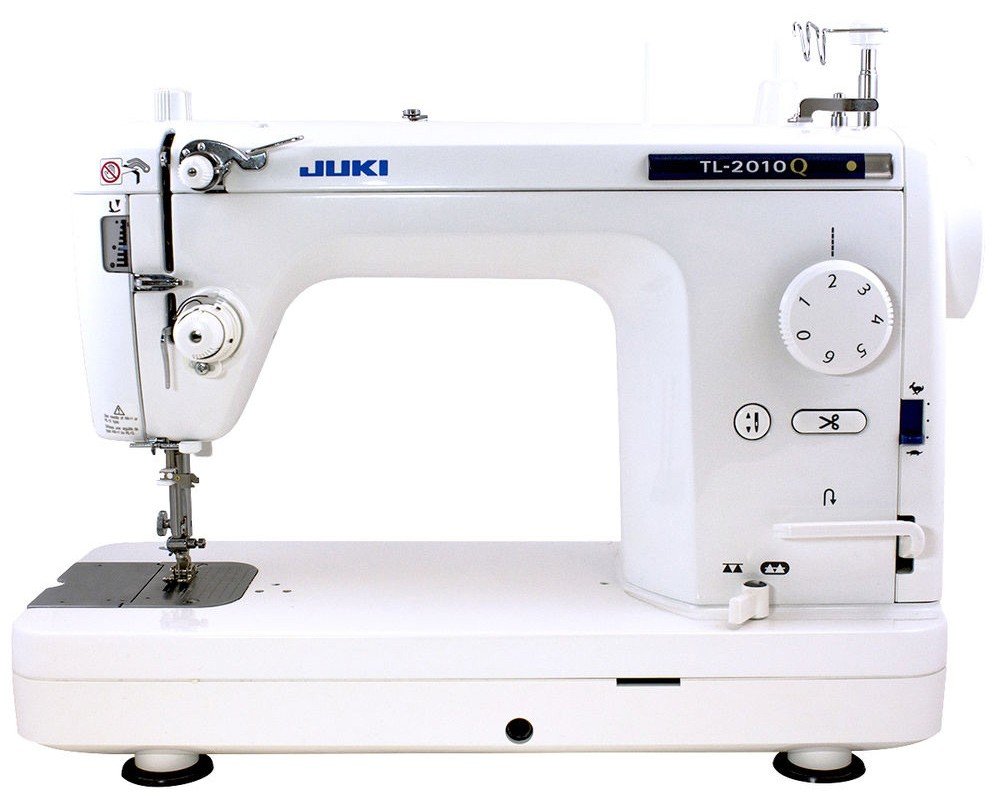
If quilting has taken over the dining table, the TL-2010Q is the specialist worth a serious look. It makes a straight stitch. That’s the entire stitch menu.
For piecing and quilting, that focus is appealing. You get speed control, needle positioning, automatic thread trimming, adjustable foot pressure and a knee lifter. Lower the feed dogs for free-motion quilting, add the extension table for support, and the setup is ready for the work you bought it to do.
The maximum speed is 1,500 stitches per minute, though there’s no prize for using all of it while you’re learning. We’d be more interested in having the controls close at hand through repeated starts, stops and turns.
Think of this as a quilting specialist, often a second machine. You’ll still need another machine for zigzag stitches and automatic buttonholes. If you want one Juki for quilts and clothes, the F600 is the more flexible choice.
Give the practicalities a little thought as well. At 25.4 pounds, “portable” doesn’t mean something you’ll happily carry anywhere. It also has a cleaning and oiling routine to follow. This is a machine to make space for and look after.
Just starting your first quilt? We’d begin with the CS7000X or explore the other options in our quilting machine guide.
Brother SE700
Best for sewing with a little embroidery on the side
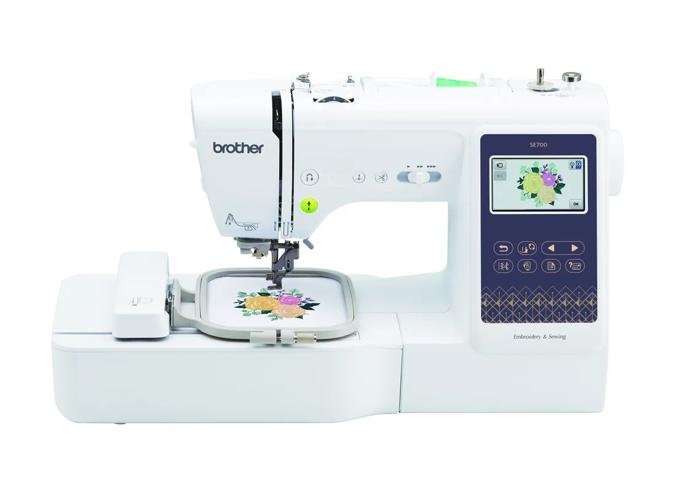
An embroidered name on a baby gift or a small floral motif on a pocket can make a project feel wonderfully personal. The SE700 is for the sewer who keeps thinking, “I’d love to add something like that.”
It combines ordinary sewing with hoop embroidery, giving you 103 sewing stitches, 135 built-in embroidery designs and 10 embroidery fonts. Wireless design transfer and automatic thread cutting round out a useful package without needing space for a second machine.
But make this your first check: will your designs fit within 4 × 4 inches? That’s the maximum embroidery area. Look at the finished size of a few designs you want to make before falling in love with the machine.
Small motifs and suitably sized names are the natural fit. A big sweatshirt design is a different purchase. A larger accessory hoop won’t enlarge this machine’s embroidery field; for more room, compare the Brother SE2000 and its 5 × 7-inch embroidery area.
We like the SE700 for someone who wants to sew and personalize gifts on the same machine. Allow for stabilizer, embroidery thread and any designs or software you’ll buy. If embroidery is already the main attraction, our embroidery machine guide is the next stop.
Where we’d spend the extra money
Stitch counts are easy to compare. The features you’ll appreciate halfway through a project take a little more thought.
Control at a comfortable pace
A speed limiter is worth paying for if you struggle to keep a light touch on the pedal. Needle positioning can be useful when stopping at corners. If you can try a machine, take your own fabric: sew slowly, cross a seam and turn a corner. You’ll learn more about the controls than you will from watching someone race along a straight line.
Adjustments for the fabrics you love
Thread tension controls how the upper and bobbin threads form the stitch. Presser-foot pressure changes how firmly the foot holds the fabric against the feed dogs. They’re different adjustments. The F-series manual explains both controls if you’d like a closer look.
For frequent garment sewing, adjustable foot pressure is a worthwhile feature to seek out. It gives you more options when setting up; choosing the right needle and learning the settings still matter.
Accessories you’ll use—and help when you need it
Price the machine with the feet and table you actually want. A well-chosen bundle can save buying those separately. A bag of extras you’ll leave in the box is less of a bargain.
For a bigger purchase, compare a local dealer’s package, too. A lesson, setup help or somewhere to take a problem can justify paying a little more. Check the seller, returns and warranty for the exact machine you’re ordering.
What about those machines with hundreds of stitches?
They have their place. If decorative borders and built-in lettering are part of the fun for you, the Brother XR9550’s stitch collection is worth exploring. It has 165 stitches, including 55 alphanumeric stitches. We wouldn’t pay extra for the larger number alone, but we would consider it for lettering we’d actually use.
The Singer Quantum Stylist 9960’s decorative sewing features go further, with stitch sequencing, built-in lettering and automatic thread trimming. Its 600 stitches give an adventurous decorator plenty to explore. Just remember that decorative stitching and lettering don’t turn it into a hoop-embroidery machine.
For repairs and everyday seams, we’d keep the decision much simpler. Buy the controls, accessories and support that suit your sewing.
A few questions before you choose
Is a mechanical machine better for beginners?
Only if you find its controls easier. Dials can feel reassuringly familiar, but a computerized machine’s speed limiter may be more useful to a nervous beginner. Try both styles if you can. Neither label guarantees easier learning or better stitching.
Do I need a serger as well?
Start with a conventional sewing machine for general projects. A serger trims and finishes fabric edges, which can be very useful when making clothes. It generally won’t replace everyday jobs such as inserting a zipper or making buttonholes. Add one when you know which part of your sewing it would help.
Does a quilting table give me more room for a big quilt?
It gives the fabric more support around the sewing bed. The opening to the right of the needle stays the same. Check that space separately: the total width of an extension table can make a machine sound much roomier than it is.
Should I just buy the Amazon bestseller?
It’s a useful starting point, but check what’s being counted. Amazon’s sewing-machine category includes handheld menders alongside full-size machines. On September 5, 2026, the XM2701, CS7000X and Singer 4423 were all in the top five of Amazon US’s sewing-machine bestseller list. Those rankings show demand; your next project should decide which one comes home.
Still torn? We’d start with the CS7000X for everyday sewing. Move up when there’s a particular job you’re eager to do, or a control you know you’ll appreciate. You can make a great deal with a sensible machine and a growing pile of fabric.
About our selections
We built this shortlist around six different sewing needs, comparing manufacturer specifications, instruction manuals, included accessories and Amazon US product availability. Sales rankings helped us identify popular choices; the recommendations are our editorial judgment of what each package offers its intended buyer. This is a research-led guide. Product information and links were checked on September 5, 2026.
interesting you haven’t reviewed any Bernina machines? I appreciate they are very expensive but would be good to know how you feel about them!
HI
I wanna sewing n embroidery machine. Trying to decide between Bernina 560e and Brother NV2600…….
Can someone suggest me which would be better choice.