
The best part of teaching a child to sew is the moment they hold up something they made. The machine should help you get there without turning the afternoon into an argument with a tangled bobbin.
For a child who’s ready to learn on a real sewing machine with an adult beside them, we’d choose the Brother CS7000X. Its speed limiter gives you a useful way to keep early practice at a manageable pace. The simpler XM2701 costs less in many listings, while the Janome Arctic Crystal offers cheerful dial controls and a compatible optional finger guard.
These are conventional sewing machines for supervised learning, not toys or machines a child can be left to use alone. The right choice depends on the child, the adult teaching them and where you’ll set up.
Our pick for learning together
Brother CS7000X—choose it for the speed control and room to grow from simple cotton projects into patchwork, clothes and gifts. An adult can use it for their own sewing too, which makes the purchase easier to justify.
Three good routes into real sewing
| What matters most? | Our pick | Know before buying |
|---|---|---|
| Keeping the learning pace manageable | Brother CS7000X | Separate speed limiter; a full-size machine |
| Spending less on a shared family machine | Brother XM2701 | Pedal controls the speed; no limiter slider |
| Colorful dials and an optional finger guard | Janome Arctic Crystal | Guard bought separately; front-loading bobbin |
The links are for US models. Check voltage, seller, returns and included accessories. We haven’t assigned blanket age ratings to these machines: readiness and close adult supervision matter more than a birthday.
Brother CS7000X
Best for learning at a controlled pace
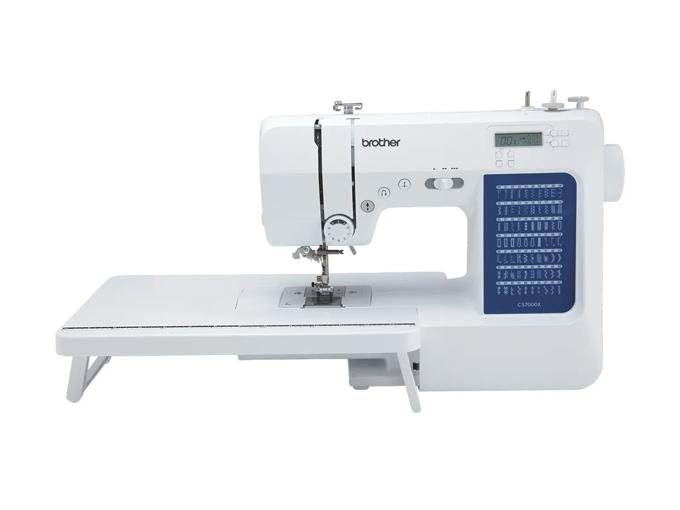
If you’re teaching someone who goes from a gentle tap to a determined stomp on the pedal, the CS7000X’s speed slider is a compelling reason to spend more. Set a low limit and early lessons can concentrate on guiding the fabric and stopping where intended.
Needle positioning is helpful when learning to turn a corner. The top-loading bobbin and needle threader also give the adult a convenient setup to teach, with fewer fiddly steps than a separate front-loading bobbin case.
The 70 stitches can wait. We’d begin with a straight stitch, a scrap of cotton and a line to follow. Later, seven one-step buttonhole styles and the included quilting accessories leave plenty of scope for a drawstring bag, a patchwork cushion or a first garment. The wide table supports the fabric but takes up extra space, so measure the desk.
This is our favorite package for a family that wants to learn together and keep using the machine afterward. You don’t have to buy something more basic just because the learner is young.
Set expectations: the speed slider isn’t a safety lock, and the standard package doesn’t include a finger guard. An adult should manage the setup, remain beside the learner and teach where hands belong. If a guard is a priority, verify an approved accessory with Brother before buying.
Explore the Brother CS7000X specifications and included accessories
Brother XM2701
Best lower-cost family option
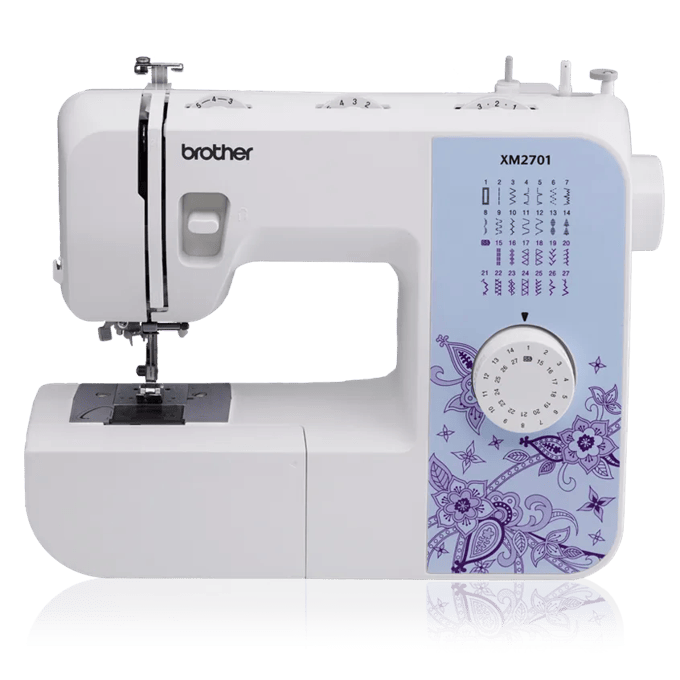
The XM2701 is a good choice when the adult already feels comfortable teaching on a pedal-controlled machine and the budget needs to cover fabric as well. Stitch selection is a dial, the bobbin drops in from above, and the needle threader helps with getting ready.
Its 27 stitches and six feet are enough for the projects we’d start with: pillowcases, simple bags and fabric bunting. You can introduce a zipper or a buttonhole when there’s a project that needs one, rather than giving a tour of every accessory on day one.
There is no separate speed-limiting slider. A child who struggles to start gently or stop promptly may find the CS7000X the better learning companion. Fewer buttons won’t solve a pedal-control problem.
We’d pick the XM2701 when that trade-off is acceptable and the price saving is worthwhile. It can remain the family mending machine if sewing turns out to be a passing interest, which is more appealing than buying a novelty model with nowhere to go next.
As with the CS7000X, don’t assume the standard bundle includes a finger guard. Ask Brother about exact accessory compatibility if you want to add one.
Explore the Brother XM2701 specifications and included accessories
Janome Arctic Crystal
Best colorful mechanical option with a guard available
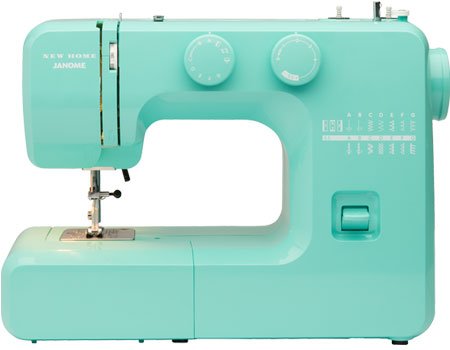
Color isn’t a trivial detail when a child is excited about having a creative space of their own. The Arctic Crystal has the cheerful turquoise body, but underneath it is a full-size mechanical sewing machine with 15 stitches, adjustable stitch length and a four-step buttonhole.
Janome lists its finger guard, part 687803008-P, as compatible with the Arctic Crystal. It’s an optional purchase, not part of the standard four-foot package. Have the adult fit it according to the instructions; a guard helps keep fingers away from the needle but doesn’t replace supervision.
The main compromise is setup. The bobbin goes into a separate front-loading case, and there’s no built-in needle threader or separate speed limiter. We’d want the person teaching to be happy demonstrating those steps. Janome’s illustrated bobbin guide and model-specific video tutorials are useful companions.
Buy this one if the learner likes the controls, the adult likes the setup and the optional guard matters to you. We wouldn’t let the color outweigh a clear need for slower, limited-speed practice on the Brother.
Explore the Janome Arctic Crystal specifications and included accessories
A toy stitcher or a real sewing machine?
Decide what you’d like the child to make before shopping. “Kids’ sewing machine” covers quite different things, from pretend-play sets and felt craft devices to conventional machines with a needle, upper thread and bobbin.
For learning to sew ordinary fabric projects, we’d choose a conventional machine once the child is ready. A craft toy can be fun on its own terms, but check whether it uses regular fabric and thread, what supplies it needs and whether its projects match your expectations. Don’t buy it assuming it’s simply a smaller version of your own machine.
Very cheap mini machines deserve the same scrutiny. Look for an accessible manual, reverse stitching, adjustable settings, replacement bobbins and clear support. Small size alone doesn’t tell you how easy something will be to thread or control.
Already have a working machine? Start there with suitable supervision and setup. A lesson together will tell you more about what your child needs than another evening comparing pink machines. Upgrade when you can name the feature that would make learning easier.
How to tell whether your child is ready
We’d look for interest, the ability to follow a short instruction and the willingness to stop immediately when asked. The learner also needs a comfortable view of the needle area and a setup that lets them use the controls without stretching or sliding forward.
A calm trial with an experienced adult or sewing teacher is a better guide than “ages eight and up” applied to every machine. If the setup or attention span isn’t there yet, hand sewing or an age-appropriate craft project can keep the interest alive without rushing the next step.
Read the actual machine manual together with the adult who’ll supervise. For example, the Arctic Crystal manual calls for close attention around children and switching off for adjustments in the needle area. These machines should be treated as working tools from the first lesson.
Make the first session a small success
- Let the adult set up first. Check the threading, needle, bobbin and stitch on a scrap before the child sits down. Troubleshooting is easier without an impatient audience.
- Use a stable table and comfortable seat. Keep the work supported and the controls within comfortable reach. An adult should position and move the machine.
- Practice starting and stopping. Choose a low speed where the machine allows it. Show where hands go, and stop the machine before repositioning near the needle. Remove pins before they reach the foot.
- Sew something forgiving. We’d choose an envelope cushion cover or a simple cotton bag over a tiny doll outfit. Straight seams and pieces large enough to guide are a friendlier first lesson.
- Finish while it’s still enjoyable. A short successful session is enough. Put the machine away securely, switched off and unplugged, when the adult’s attention moves elsewhere.
Let the child choose the fabric or an easy decorative detail. Even a slightly crooked bag can become a prized possession when it looks like something they wanted to make.
Parents’ buying questions
Is a finger guard essential?
It’s a useful accessory to investigate, especially for a new learner, but it doesn’t make a machine safe to use alone. Buy one confirmed for the exact machine and intended foot, and follow the fitting instructions. Avoid guessing that a “universal” accessory will work.
Is a computerized machine too complicated?
It can actually offer a helpful learning control: the CS7000X’s speed limiter is the reason it leads this guide. Start with one stitch and a few controls. You can ignore most of the menu until a project calls for it.
Should I buy the smallest machine?
Choose a setup the child can use comfortably. A tiny machine may save storage space but still have fiddly threading and an awkward pedal. All three picks here are conventional machines; check the dimensions on the listing and allow room to support the project.
What else belongs in the gift?
A simple woven cotton, matching thread, the correct bobbins, spare needles for the adult to fit and a plan to sew together. We would happily trade a giant accessory kit for a patient first lesson.
Our choice remains the CS7000X for learning together. Choose the XM2701 when the saving matters and pedal control is comfortable, or the Arctic Crystal when its mechanical setup and compatible guard suit your family. For an adult’s first purchase, our beginner sewing machine guide compares the next steps in more detail.
About our selections
We compared current manufacturer specifications, manuals, accessory compatibility and Amazon listings. We prioritized controls, setup and useful first projects, rather than toy styling or unsupported age claims. This is a research-led guide; the recommendations are our editorial judgment. Product information and links checked September 5, 2026.
Personally my kids found the Singer ZigZag to be more of a toy than an actual sewing machine. Switched them to the Janome Fastlane and found it much better – particularly for those over 10. I know they won’t grow out of it for a while and gives them a chance to learn on a real machine
Can’t decide between the Haitral and Michley?? Advice please!!
They are actually pretty similar. The Michley is a little cheaper, but we think the Haitral is the better machine in terms of durability and features.